
The Sounds We Learn to Ignore
Disclaimer: These blogs and pages are for informational and educational purposes only. I am not a medical professional, and nothing in this resource should be taken as medical advice. Always consult with a qualified healthcare provider before making changes to your diet, lifestyle, or health routine.
By Nicholas Magliochetti
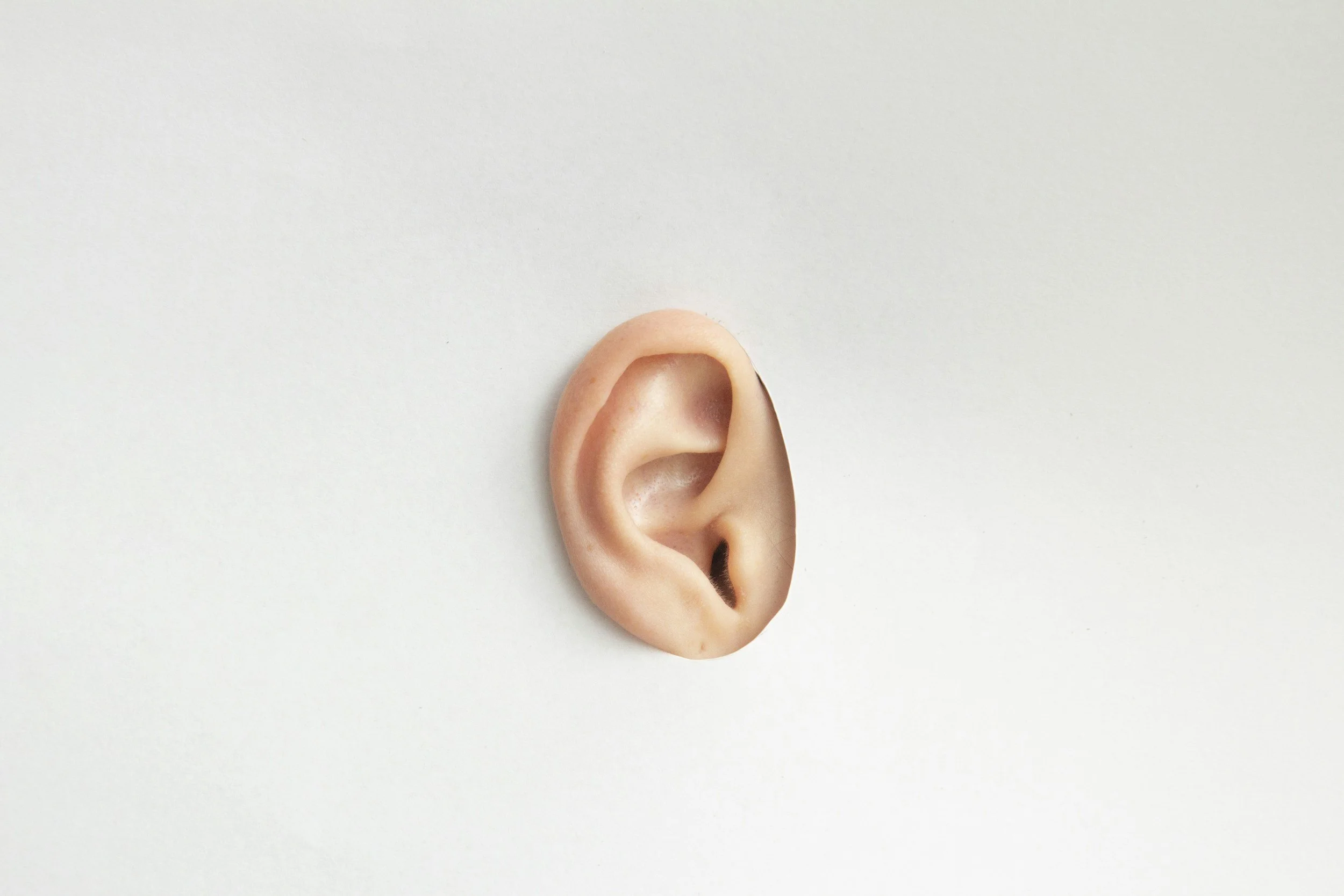
One of the first things I noticed when I started spending time in recording studios was how much attention musicians paid to sound.
Entire conversations could revolve around the attack of a kick drum, the brightness of a guitar amplifier, or the subtle difference between two microphones that most people would never notice. Musicians learn to listen with an intensity that can appear obsessive to outsiders. They spend years training themselves to hear details that others overlook.
Yet for all of that attention, there is one sound many musicians become remarkably good at ignoring.
The ringing.
It often arrives gradually. Sometimes it appears after a particularly loud concert. Sometimes after a long recording session. Sometimes it becomes noticeable only in the quiet moments at the end of the day. In many cases, it is discussed so casually that it barely registers as a health concern.
Someone mentions it while packing up equipment.
Someone jokes about it after a show.
Someone says, "My ears will be fine tomorrow."
Most of the time, the conversation ends there.
I remember how normal these exchanges seemed. They were simply part of the environment. Loud music was unavoidable. Hearing changes felt like an accepted cost of participation, no different than sore hands after a long rehearsal or fatigue after a weekend on the road.
Looking back, I find that normalization fascinating.
Musicians spend thousands of hours developing one of the most sophisticated listening abilities found in any profession. A trained engineer can hear subtle frequency imbalances that escape most listeners. A seasoned musician can identify pitch discrepancies measured in fractions of a semitone. Entire careers are built upon the ability to detect and interpret sound with extraordinary precision.
And yet many musicians accept the gradual loss of that ability with surprising resignation.
Part of this may be cultural. Music rewards persistence. There is a long tradition of pushing through discomfort in pursuit of a performance, a recording, or a career goal. The same determination that helps someone practice an instrument for thousands of hours can also make it easy to dismiss warning signs. A ringing ear becomes a story rather than a symptom. Temporary hearing fatigue becomes routine. Problems that develop slowly are often difficult to recognize because each day feels almost identical to the one before it.
There is also something uniquely challenging about hearing loss itself. Unlike a broken bone or an injured tendon, hearing changes are often invisible. They do not announce themselves dramatically. They emerge gradually, at the edges of awareness. Conversations become slightly harder to follow in crowded rooms. Certain sounds seem less distinct than they once were. The brain adapts. Compensation becomes second nature. The process can unfold over years before a person fully appreciates what has changed.
By then, the loss may already be permanent.
This is one of the paradoxes of hearing health. The most effective interventions often occur long before a problem feels urgent. Ear protection, volume management, hearing evaluations, and education rarely attract much attention because they are preventive measures. They do not promise immediate results. They simply reduce risk over time. Unfortunately, risk is easy to ignore when the consequences remain distant.
What makes this particularly important for musicians is that hearing is not merely a biological function. It is a professional tool, a creative medium, and often a source of identity. The ability to perceive subtle details in sound influences how music is performed, recorded, mixed, taught, and enjoyed. Protecting hearing is not separate from musicianship. It is one of the ways musicians preserve their ability to continue making music in the future.
The goal is not to create fear around loud environments or to suggest that musicians should avoid the experiences that make music exciting. Live performances, rehearsals, studios, and concerts will always be part of the profession. The goal is simply to recognize that hearing, like any valuable instrument, deserves care.
For years, many of us learned to ignore the ringing.
Perhaps the better question is why we ever thought we had to.